


Drugs - Medical Psychological And Social Facts
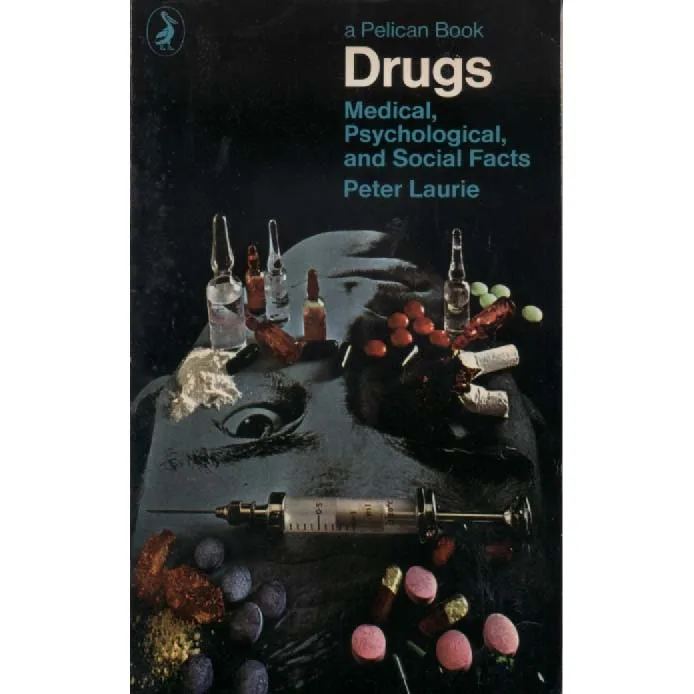
Publisher: Pelican
Format: Paperback
ISBN: 0140211047
Ah, "Drugs - Medical, Psychological and Social Facts" by Peter Laurie, a title that rolls off the tongue like a badly crafted tongue twister. Published in the halcyon days of 1971, when bell-bottoms were in fashion and the world was far more interested in the latest Beatles album than the latest medical findings, this tome promises to be a veritable cauldron of knowledge bubbling over with insights about substances that were either the key to enlightenment or the bane of existence—sometimes both, as is often the case with such things.
Imagine, if you will, a time when the most controversial thing you could do was discuss drug use openly over a cup of tea in a faux-bohemian café. This book ventures into the murky waters of the medical, psychological, and social implications of drugs with all the subtlety of a sledgehammer. It’s like being invited to a dinner party where the main course is a debate over the merits of hallucinogens while the host tries to convince you that the wallpaper is talking back.
Laurie’s work is an exploration of a world where medical professionals and experimental psychologists donned their lab coats and rolled into the fiery pits of human experience to dissect the various effects of drugs. Do we really know what we’re putting in our bodies? Does smoking a little something-something help you find your inner self, or does it merely lead you to the bottom of the couch cushions? These are the kinds of questions that, despite being posed in a world of polyester and optimism, still resonate today, albeit with a bit more existential dread attached.
This book is essentially a time capsule, packed with the author’s observations, research, and opinions—crafted with care and perhaps a touch of the counterculture spirit. It would not be out of place to pull it off the shelf and read passages aloud at your next social gathering, preferably while sporting some groovy 70s fashion. Your friends will either find you the most fascinating person in the room or slowly back away, feigning interest in the avocado toast. Either way, you win.
In a world where social media influencers parade their knowledge of ’wellness’ and ’mindfulness’ like peacocks, Laurie’s take on drugs serves as a nostalgic reminder that the conversation has been going on much longer than we care to admit. After all, it seems every generation must wrestle with the idea of what constitutes “acceptable” behavior when it comes to substances that alter the mind and body.
But wait—there’s more! Within these pages, you will uncover the layered complexities surrounding drug use, from the societal stigmas and medical debates to the psychological ramifications that can leave one pondering their very existence. It’s like a philosophical buffet where every dish is a little too spicy, leaving you both enlightened and mildly regretting your choices. You may find yourself thinking: "Who knew drugs could be so... academic?"
Condition: Good. This means you may encounter some dog-eared pages, perhaps a rogue coffee stain or two, and a few annotations in the margins that could either be deep philosophical musings or the random thoughts of a slightly confused reader. It adds character, much like the peculiar neighbor who insists on wearing socks with sandals but is somehow endearing nonetheless.
- Explore the radical social changes of the 70s.
- Delve into psychological theories that may still apply today.
- Understand the medical community’s evolving perspective on drugs.
- Marvel at the outdated yet charmingly earnest writing style.
- Get a glimpse of what it was like before the rise of the internet debates.
So, if you’re feeling particularly adventurous and want to dip your toes into the wild waters of drug-related discourse, this book is an odd but fascinating choice. Get your copy from Crappy Old Books, where the past is always just a page away, and remember: knowledge is power, even if it comes with a side of existential crisis.
Keep browsing: See more Academic books Other books by Peter Laurie
